Netanyahu Faces Election With Polls Showing Little Gap on Gaza Strategy
Voters choose between the Prime Minister's bloc and rivals who agree on war aims but clash on judicial power and ultra-Orthodox conscription.
By Marcus Reed ·
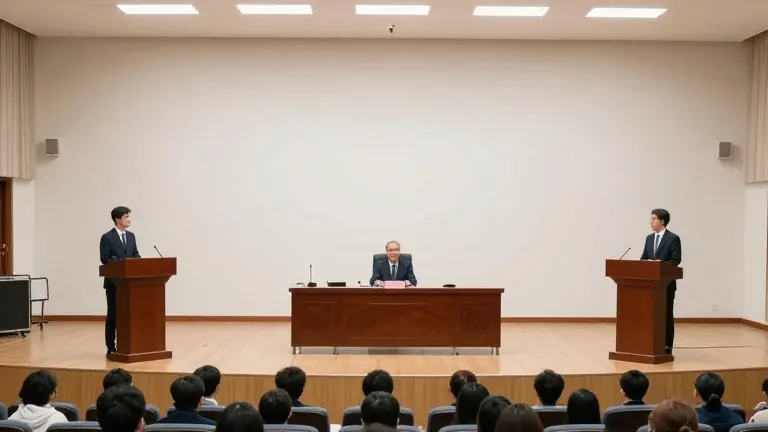
Israel enters its Tuesday election with leading candidates largely aligned on the conduct of the war in Gaza and the future of Palestinian statehood. The primary distinction between the contenders lies in domestic governance, specifically the role of the Supreme Court and the military draft obligations of the ultra-Orthodox population. More than 74,000 people have been killed in Gaza, a figure notably absent from the detailed platforms of the two main alliances.
The central conflict centers on the judiciary. The current government, led by Prime Minister Benjamin Netanyahu, has passed measures to limit court authority, including a July law that stripped Attorney General Gali Baharav-Miara of significant powers. These changes are set to take effect after the vote. Opposition leader Gadi Eisenkot pledged to cancel all 'legal revolution laws' immediately upon convening the new Knesset. Justice Minister Yariv Levin argues the election offers a chance to complete the judicial overhaul, while Netanyahu insists the executive branch must not be crushed by the courts.
Conscription remains a sharp point of disagreement. The government relies on Shas and United Torah Judaism for support in the Knesset. Both parties demand legislation protecting ultra-Orthodox yeshiva students from mandatory service, seeking to overturn a June 2024 Supreme Court ruling. After approximately 40 ultra-Orthodox men were arrested this month for dodging the draft, Netanyahu called the arrests a deliberate attempt to harm the process. Shas leader Aryeh Deri stated his party would not join a government without regulated status for yeshiva students. Eisenkot framed the choice as one between a 'draft-dodging government' and a government of conscription.
Candidates also diverge on the two-state solution. Netanyahu stated there will be no Palestinian state. Finance Minister Bezalel Smotrich urged the next government to cancel the Oslo Accords and pursue sovereignty. Eisenkot called the two-state principle a mistake. Yair Golan, leader of the Democrats party, said a leap to two states is impossible while society remains in trauma, preferring 'civil separation.'
Accountability for the October 7, 2023 attacks has dominated the campaign. Chief of Staff Herzi Halevi resigned in January 2025 following inquiries into security failures. Shin Bet head Ronen Bar left in June 2025 after a dispute with the Prime Minister. No comparable inquiry has examined Netanyahu's role, despite reports that the UAE and Egypt warned him before the attack. Eisenkot promised a State Commission of Inquiry, while Netanyahu proposed a government-led inquiry that has been deferred to the next session.
Source: Al Jazeera
More Politics · World news · Report a business · Got a Story?