68% of Israel's Palestinian citizens may vote Tuesday, shattering 2022 record
Analysts project turnout will surge from 54% to nearly three-quarters as voters seek to counter far-right promises of displacement.
By Pablo Serrano ·

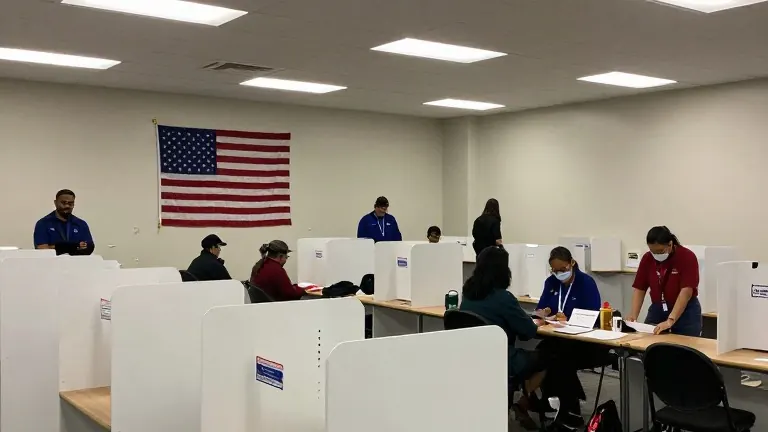
Polls suggest 68 percent of Israel's Palestinian citizens will cast ballots on Tuesday, a sharp rise from the 54 percent turnout recorded in the 2022 election.
Ameer Fakhoury, an analyst at the Vanleer Institute, predicts participation could climb to 72 or 73 percent. If realized, the result would match the all-time high for the community achieved in 2020.
The surge is expected to prop up the Joint List and Raam parties, which traditionally represent the community. A strong showing could secure them approximately 15 of the 120 seats in the Knesset, Israel's parliament.
Ibrahim Said, a 70-year-old resident of the Galilee, broke his decades-long boycott of Israeli elections. He last voted in 1980 and had previously dismissed the process as offering no tangible benefits to his community.
Said now views the vote as a mechanism for survival. "Without a doubt, we must vote this time. We are living in fear," he said. He described his current status as feeling like a twentieth-class citizen rather than a second-class one.
The shift in voter sentiment coincides with the election of a government that includes prominent far-right figures. Benjamin Netanyahu returned to power in 2022 alongside Bezalel Smotrich and Itamar Ben Gvir.
Smotrich’s Religious Zionism party has campaigned on the promise to "Judaise" the Galilee and Negev regions, areas with large Palestinian populations. Two other parties have also placed deportation and displacement at the center of their platforms.
Fakhoury characterized the high expected turnout as a sign of low confidence in state institutions. He stated, "We are voting to prevent displacement and protect the most basic conditions of our existence."
Jowan Safadi, a musician known across the Arab world, is reconsidering his long-standing refusal to vote. He historically boycotted elections to reject the democratic facade of the state, noting that only 2.1 million Palestinians are eligible to vote in Israel.
Safadi said the current political climate has forced him to re-evaluate his stance. "My only hope is that changing the people in power might bring someone who is slightly less barbaric and sadistic," he said.
Adham, a mechanic in northern Israel, plans to vote for Raam, a socially conservative party led by Mansour Abbas. His decision is driven by concerns over organized crime and the safety of his three children.
Police data shows 252 homicides in Palestinian communities in Israel last year. In the first half of 2026, authorities recorded 147 such killings, with a clearance rate of only 12 percent this year.
Source: Middle East Eye