French report links local groups to long-term political strategy
A May 2025 Interior Ministry document describes how networks build influence through schools and charities to reach a goal of municipal Islamism.
By Sienna Foster ·
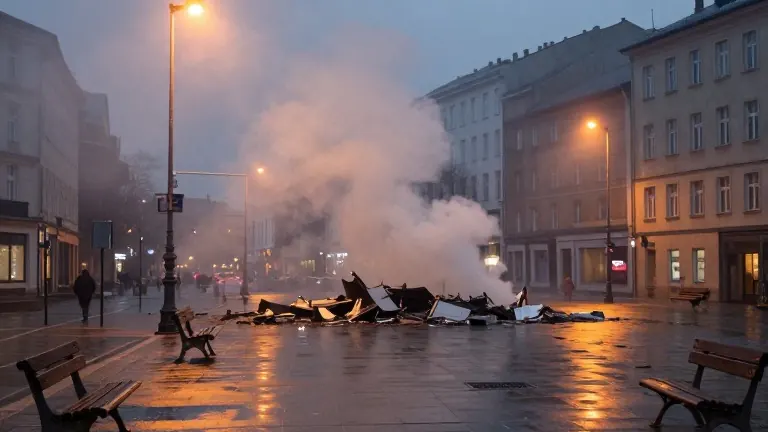
Paris saw flames rise above Place de la République in mid-October, marking the start of a wave of unrest that spread across France. The disruption caused damage to public buildings and vehicles, while local businesses suffered heavy losses. Interior Minister Laurent Nuñez admitted that authorities struggled to maintain control in several large cities during this period.
The scale of the damage is substantial. Approximately 3,000 businesses across the country were damaged or looted. More than 400,000 people marched again one week after the initial flare-ups, leading to new clashes in Paris and Marseille. In response, the French government imposed localized nighttime curfews. Across the border, Italy deployed 500 additional soldiers to Milan following similar riots.
Security sources identified radical-left activists and students as primary drivers of the recent violence, noting that much of the looting was opportunistic. However, a report commissioned by France’s Interior Ministry in May 2025 points to a different, longer-term threat. The document examines the Muslim Brotherhood and political Islam within France, describing a strategy of entryism rather than open violence.
The report outlines a plan for what it calls municipal Islamism. This approach aims to spread influence from the bottom up by building local ecosystems. These ecosystems include mosques, schools, sports clubs, and pressure on elected officials. The goal is to establish a strong presence in neighborhoods where the state is perceived to have failed, filling the gap with organized community services.
The financial backing for these institutions is significant. A committee report behind a January resolution in the French National Assembly estimated that Qatar invested tens of millions of euros since the early 2000s in Brotherhood-oriented institutions in Europe. The report cited the 2019 Qatar Papers investigation, which identified about 140 projects financed through Qatar Charity. Most of these projects were mosques, schools, and Islamic centers.
The resolution called for the Brotherhood to be placed on the European Union’s terrorist list, a political demand rather than a formal designation. The report noted that while Doha has moderated its support and tighter oversight has reduced some funding channels, cultural, educational, and sports associations remain outside that oversight. This allows local networks to continue building influence through everyday community interactions.
The strategy relies on patience and local integration. The report warned that this long-term project could harm the fundamental interests of the nation if left unchecked. It does not claim that a plan exists to seize the state, but it highlights the risk of religious authority submerging civil law in local governance. The focus is on how organized networks gain power while public attention is on immediate street protests.
Source: Jewish Link of NJ · original report published