410,000 Protesters Take to Streets as France's Debt Crisis Deepens
Student-led unrest has spread across the country, forcing Paris to manage large crowds while consumer confidence hits a ten-year low.
By Pablo Serrano ·
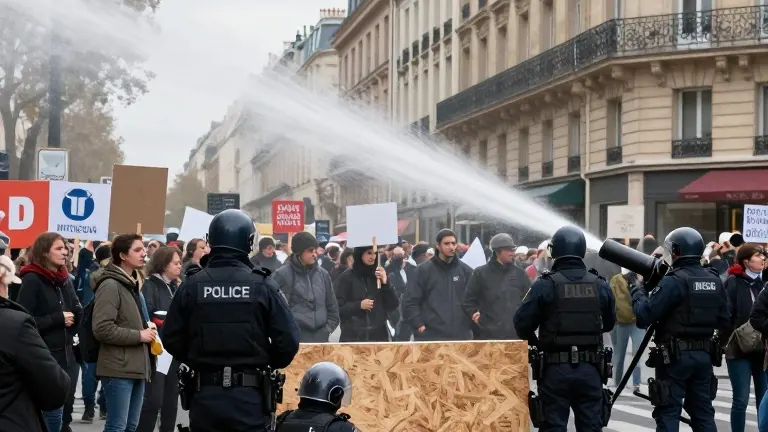
Approximately 410,000 people marched across France on October 24, 2026, in a nationwide show of force that has intensified political pressure on President Emmanuel Macron. Roughly 110,000 of those demonstrators gathered in Paris, where labor unions and students joined forces to demand action on the cost of living and public services.
The unrest did not start with a single event. It began with students protesting school conditions and staffing shortages. Those initial demonstrations quickly expanded to include trade unions and other groups frustrated with economic policies. While many marches remained peaceful, others escalated into violent clashes, fires, and extensive property damage, according to French authorities.
The timing of these protests coincides with a period of financial strain for the French government. The country is dealing with a high budget deficit and weak economic growth. Rising energy costs and political uncertainty are adding pressure to businesses and households. In October, French consumer confidence dropped sharply, reaching its lowest point in more than a decade.
Macron is now navigating the final months of his presidency before the 2027 election. He is constitutionally barred from seeking a third consecutive term. His government faces criticism from political opponents for its handling of the unrest, while competing parties present their own alternatives to the current administration. The administration must balance responding to public demands with the need to reduce spending and stabilize public finances.
Additional demonstrations are planned for the coming weeks. The situation has drawn international attention as other governments confront similar questions about affordability and public dissatisfaction. Although these events occur during the final days of the U.S. midterm election campaign, French political circumstances differ from those in the United States.
The unrest serves as a case study for how economic frustration shapes political debate. French authorities continue to monitor the situation as they prepare for further protests. The next phase of demonstrations will test the government's ability to maintain order while addressing the financial concerns that sparked the movement.
Source: WABC · original report published