TPU Expansion: Google Cloud Opens Chip Sales to Oracle
Alphabet will allow Oracle to host its custom AI chips outside Google's own data centers, a move analysts say could shift market share away from Nvidia.
By Marcus Reed ·
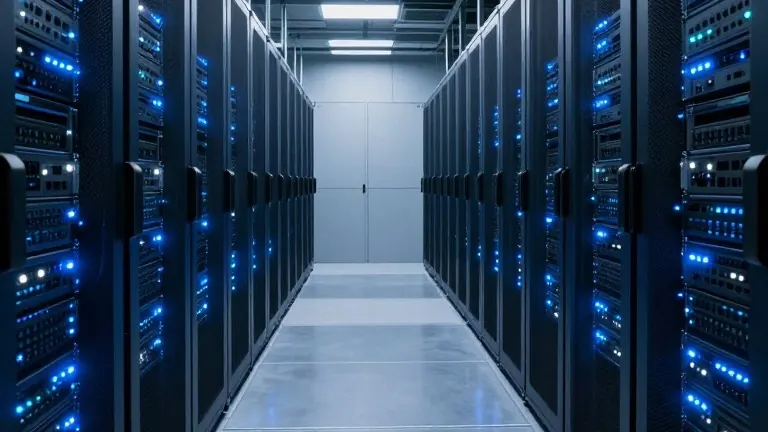
Alphabet announced on Tuesday that Oracle will begin offering Google's tensor processing units to external customers.
This marks the first time Google will make its custom AI hardware available outside of its own cloud infrastructure. The disclosure came one day before the company releases its third-quarter earnings report. For years, Alphabet has promoted a full-stack strategy where customers buy chips, models, and cloud services from a single provider, a model that rivals like Amazon and Microsoft have attempted to replicate. By exporting its hardware, Google is actively entering the AI chip market, a sector where Nvidia has held a dominant position.
Cloud chief Thomas Kurian, who joined Google in late 2018 after spending more than 20 years at Oracle, is leading this partnership approach. He operates from a position of financial strength. Analysts project Google Cloud revenue will increase by approximately 90% year over year, following an 82% jump in the second quarter. Google had already permitted outside data centers to access TPUs during the second quarter, prior to the formal announcement with Oracle.
Market observers view the shift as a tactical change in Google's business model. Chris Ballard, a managing director at Check Capital Management, noted that Google is a strong competitor that could eventually capture market share from Nvidia. Uday Cheruvu, a portfolio manager at Harding Loevner, stated that Google has historically been unable to serve external customers effectively but that its mindset has now changed. Financial forecasts for the TPU business vary, but all indicate rapid expansion. TD Cowen estimates TPU sales will reach $9.4 billion in the second half of this year and $62.5 billion in 2027. Wells Fargo projects about $9 billion in third-quarter sales and $99 billion for next year.
Alphabet Chief Financial Officer Anat Ashkenazi said in July that only a small portion of TPU revenue from current contracts will be recognized this year. She indicated that the vast majority of that revenue will arrive in 2027. Google still trails its largest competitors in total scale. Second-quarter cloud revenue stood at $25 billion, compared to $42 billion for Amazon Web Services and $29 billion for Microsoft Azure, though Google is currently the fastest-growing provider. Selling chips externally introduces trade-offs, particularly regarding profit margins. TD Cowen estimates a 20% operating margin on TPU sales, which is lower than Google's overall cloud margin of about 35% in the last quarter. Cheruvu does not expect the overall cloud operating margin to expand much beyond the mid-30s. Google declined to comment on the margin implications.
Kurian must balance external customer growth with the company's internal requirements. At a Goldman Sachs conference in September, he stated that Google's AI servers pay for themselves in under two years, while those running its own silicon reach payback in roughly half that time. He attributed this efficiency to the ability to optimize the entire software and hardware stack. SemiAnalysis estimates that the latest Ironwood TPU costs about 44% less to own and operate than an Nvidia GB200 server.
Google's largest TPU customer, Anthropic, is also a direct competitor in the AI model space. The company agreed in October to use up to 1 million TPUs in a deal worth tens of billions of dollars. Mizuho analysts say this agreement will bring nearly a gigawatt of capacity online this year, describing it as a way for Google to arm its closest model competitor. OpenAI has also confirmed plans to purchase TPUs from Google. To help finance these chips, Broadcom detailed a $63 billion vehicle backed by Blackstone and three large banks this week. The fund will buy hardware from Broadcom and lease it to Anthropic for five years. William Blair analysts suggest this financing covers about half of Anthropic's 2027 needs, indicating further capital raises are likely. In its IPO filing on Monday, Anthropic confirmed it uses silicon from Google, Amazon, Nvidia, and Advanced Micro Devices to select the best price-performance options for each workload.
Source: CNBC
More Tech · National news · Report a business · Got a Story?