UPS Crash In Louisville Highlights Risks Near Airports
A recent investigation found that federal safety buffers around airports may not adequately protect residents from ground-level impacts during aviation accidents.
By Marcus Reed ·
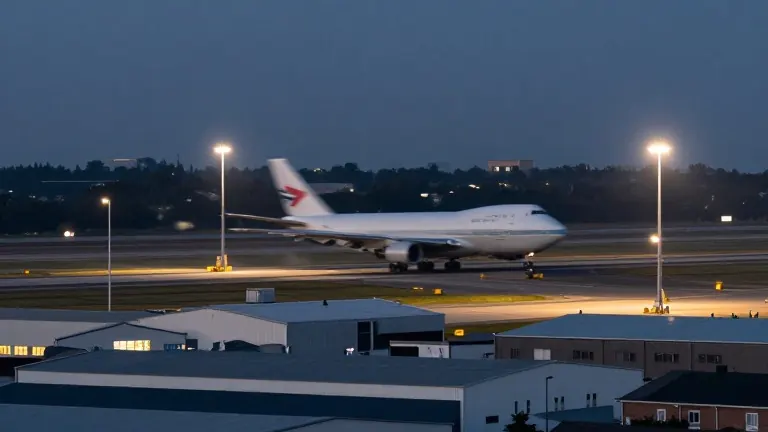
A UPS cargo plane crashed seconds after takeoff in Louisville, Kentucky, last year, killing three crew members and twelve people on the ground. The accident occurred in an industrial area near the runway, a location that federal guidelines classify as a buffer zone intended to mitigate such worst-case scenarios. Despite these established minimum distances, the incident has drawn scrutiny to the living conditions of millions of Americans who reside or work in close proximity to active airfields.
A national investigative review of federal crash data revealed that accidents involving planes striking homes and neighborhood streets are not rare anomalies. These events frequently result in casualties among people on the ground, not just those aboard the aircraft. The review identified examples of such crashes occurring across the country, suggesting that current safety margins may be insufficient to prevent ground-level trauma during aviation disasters.
Experts and local officials argue that more action is needed to protect structures and people outside the immediate airport perimeter. Joce Sterman, a senior national investigative reporter, interviewed advocates pushing for industry-wide changes. Among them was a Florida mayor whose city has experienced a series of close-proximity crashes. The investigation also featured the mother of a four-year-old boy who was killed when a plane struck his family's car just feet from an airport entrance.
Retired airline pilot and safety advocate participants in the discussion proposed solutions that address risks on both sides of the runway fence. They suggested that current regulations focus too heavily on the aircraft's path and not enough on the density of development in the surrounding buffer zones. The goal of these proposals is to reduce the likelihood that a mechanical failure or takeoff error results in a fatal ground impact.
The report on airport safety is part of a larger weekend investigation that also examined other risks facing residents. One segment focused on generator use during power outages in southeast Louisiana. A federal report based on four years of data found that carbon monoxide from backup power sources poses a hidden danger to families. Investigators are now calling for a major change in regulations regarding how close generators can be placed to homes.
Another segment looked at emergency medical services in rural areas. Some communities are testing the use of one-person aircraft to transport paramedics and life-saving gear directly to patients. This method allows responders to bypass road networks, potentially reducing the time between an emergency call and the arrival of medical aid. The initiative aims to close the gap in response times that often affects rural patients.
Source: KVVU-TV