Ukrainian drones now fly themselves to strike targets in final stretch
The Fourth Law's Lupynis-10-TFL-1 uses onboard AI to navigate the last 500 meters, reducing reliance on human pilots in a war increasingly defined by autonomous technology.
By Pablo Serrano ·
Ukrainian defense firms are deploying autonomous drones that manage their own final approach to targets, a shift that compresses decision-making times from minutes to microseconds on the front line.
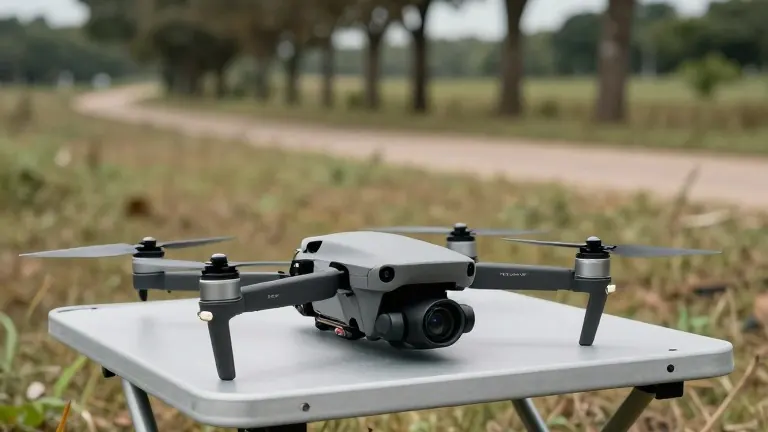
Yaroslav Azhnyuk, co-founder of The Fourth Law and Odd Systems in Kyiv, says the technology provides a critical asymmetric advantage. His companies have developed the Lupynis-10-TFL-1, an autonomous drone used by dozens of Ukrainian military units. The system allows the aircraft to operate without constant human input during the most vulnerable phase of the flight.
The drone combines a standard first-person-view airframe with an onboard computer running a deep-learning neural network. This software takes control during the final 500 meters, or 0.3 miles, of the mission. Azhnyuk notes that this specific type of AI is distinct from the large models powering data centers or self-driving cars. It relies on simple image recognition tools to navigate, select targets, and maintain course.
The neural network is trained on hours of combat footage to identify specific threats. It can distinguish between light-armored vehicles, tanks, and flying objects. During a test outside Kyiv, a pilot known by the call sign Professor launched the drone and selected a dilapidated car on a dirt road as the target. Once a red flash indicated a lock, the pilot released the control stick. The drone then flew itself to the vehicle, with onboard algorithms continuously adjusting its path.
Stab, the head of the test and integration team, explained that the microcomputer inside the drone holds all the necessary processing power. He described the system as a collection of algorithms that keep the drone on course. While the test drone carried no explosive, battlefield versions would deliver a payload to the designated target. Stab emphasized that humans still select the target, and safeguards prevent the drone from acting without that initial command.
President Volodymyr Zelenskyy has warned that AI could lead battlefield decisions as soon as next year. Russia is also deploying AI-enabled drones, creating a high-tech arms race. Azhnyuk argues that Ukraine must adopt similar capabilities to counter adversaries whose systems can make decisions in microseconds. He stated that if Ukraine refuses to use AI for defensive decision-making while Russia uses it for offense, Ukraine will be at a disadvantage.
The company names its weapons after Ukrainian intellectuals persecuted by Russia in the last century. The Lupynis is named after Anatoliy Lupynis, a poet and political activist who endured Soviet imprisonment. Azhnyuk said the naming honors these figures and their enduring ideas. He acknowledged that AI technology is evolving quickly, but he maintained that current systems are not yet capable of making independent strategic decisions.
Azhnyuk compared the drones to calculators, saying they are unlikely to stage a rebellion. He noted that the primary focus remains on survival in the current conflict. He added that if Ukraine loses the war, there will be little opportunity to debate the ethics of the tools used to fight it.
Source: WVXU