Michigan voters face a packed ballot that could shift national power
With the governorship, both Senate seats, and key House districts on the line, the outcome hinges on a handful of suburban and rural counties.
By Marcus Reed ·
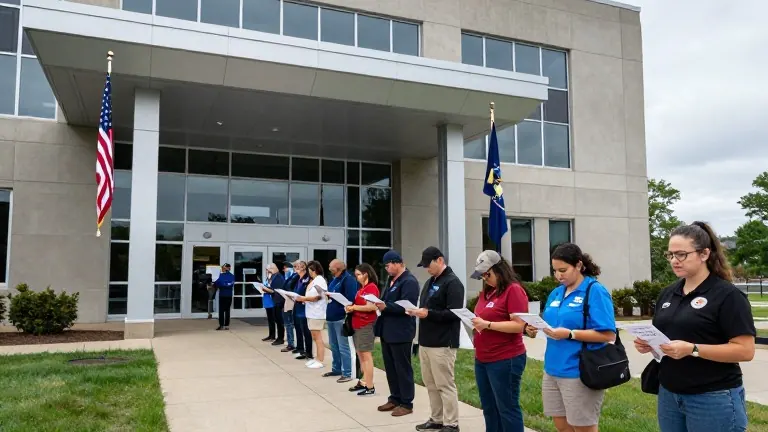
Michigan voters head to the polls on Tuesday with a decision that could reshape the balance of power in Washington and Lansing. The state is deciding on a full slate of statewide offices, all seats in the state legislature, and several congressional districts that could determine which party controls the House.
The contest for the U.S. Senate has drawn national attention. Democratic nominee Abdul El-Sayed is challenging Republican nominee Mike Rogers to replace retiring Sen. Gary Peters. El-Sayed, a former Detroit public health official, has framed the race as a choice between a Trump ally and a progressive voice. Rogers, a former congressman, has positioned himself as a moderate alternative. President Donald Trump, Vice President JD Vance, and former President Barack Obama all campaigned in the state during the final weeks of the election.
El-Sayed’s primary victory in August over Rep. Haley Stevens marked a major win for progressives. That result came in a year when left-wing challengers unseated incumbents across the country. However, the Michigan Senate seat is not a safe Democratic holding, unlike many of the other progressive wins this cycle. Rogers secured the Republican nomination without opposition after losing the state's other Senate race to Elissa Slotkin in 2024.
The race for governor pits Democratic Secretary of State Jocelyn Benson against Republican Rep. John James. They will succeed Gov. Gretchen Whitmer, who is leaving office after two terms. The outcome of this race will determine who controls the executive branch in Lansing for the next four years.
Control of the U.S. House is also in play. Democrats need to gain four seats to take back the chamber. They have seen unexpected strength in traditionally red states like Alaska, Iowa, Kansas, and Texas. Republicans are counting on holding the Michigan seat to block that path. In the 4th Congressional District, Rep. Bill Huizenga faces state Sen. Sean McCann. In the 7th District, Rep. Tom Barrett is running against community organizer William Lawrence. The open 10th District race features Republican Mike Bouchard and Democrat Christina Hines among the candidates.
Statewide, Democrats are defending a narrow majority in the state Senate, while Republicans hold a slim majority in the state House. All seats in both chambers are up for election.
County-level results will drive the final outcome. Wayne County, home to Detroit, is the largest county and a key source of Democratic votes. It has the highest share of Black residents in the state at 37 percent. Washtenaw County, which includes Ann Arbor, is another Democratic stronghold. Genesee County, including Flint, has not voted for a Republican presidential candidate since 1984, though the margin narrowed in 2024.
Suburban and central counties will likely decide the close races. Oakland and Macomb counties in the Detroit suburbs and Kent County in Grand Rapids are major battlegrounds. Saginaw County in central Michigan has backed the statewide winner in nine consecutive presidential elections since 1992. In 2024, it was the only county in the state to vote for both Donald Trump and Elissa Slotkin.
Polls close at 8 p.m. Eastern Time in most of the state, but at 9 p.m. Eastern Time in parts of the Upper Peninsula. The Associated Press will not declare winners in statewide races until all polls are closed. Early voting made up about 42 percent of the vote in the 2022 gubernatorial race. A 2023 law allows larger jurisdictions to begin processing mail ballots up to eight days before Election Day, a change that altered the pace of results in 2024 compared to the slower count in 2020.
Source: Michigan Public