
Hospital visits on Shabbat require careful planning for Jewish residents
Rabbi Mann outlines specific rules for transporting items and choosing transportation during labor.
By Marcus Reed ·
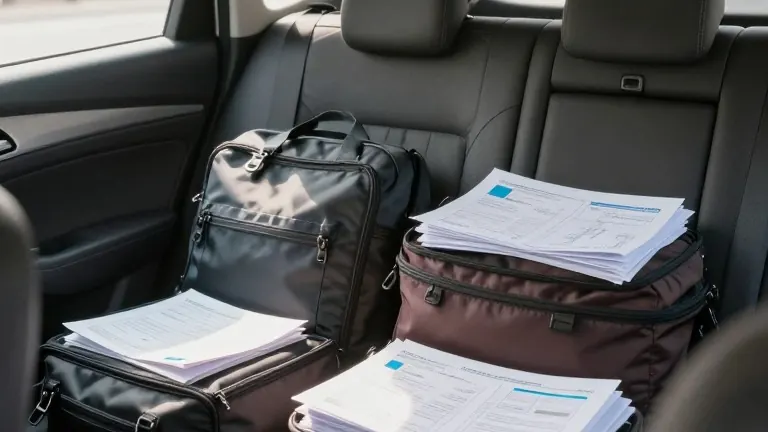
Residents planning for a hospital birth on Shabbat face specific restrictions on what they can pack and how they travel. The availability of a non-Jewish driver determines much of the freedom available to the expectant parent and their partner. Rabbi Mann, a dayan for Eretz Hemdah and a staff member of Yeshiva University’s Gruss Kollel in Israel, provides a detailed overview of these halachic considerations.
The method of transportation is the first factor to address. Using a local goy shel Shabbat or a reliable non-Jewish car service offers distinct advantages. These options simplify the trip and expand what items can be brought to the hospital. If the need to reach the hospital arises suddenly, these logistical concerns become irrelevant. However, for planned departures, the choice of driver dictates the permissible load.
Passengers may always carry items that aid in a safe and smooth birth, including necessary documentation. The rules become more complex for items that are useful but not strictly required for a healthy delivery. A general guideline permits actions that are twice removed from a biblical prohibition. The preferred method to achieve this second removal is by using a non-Jew to transport the items.
Carrying objects outside an eruv presents its own set of challenges. In many areas, streets are not considered a public domain under biblical law. This classification removes one level of restriction for carrying non-critical items. Another approach involves grouping non-critical items with items needed for life, such as medical equipment. This method relies on the concept of adding to quantity rather than performing a new action. If a non-Jew is unavailable, other options include carrying items continuously between private domains or sharing the load between two people.
Traveling between different living clusters, or techum, is another point of contention. Moving between two places in the same city usually falls within the same techum. However, travel from a rural area to a city, or between two cities, involves a violation of techum rules. This restriction applies to both the people moving and the objects they carry. A leniency exists for the person due to the life-safety status of the birth, which extends to their personal objects.
The physical impact of extra weight on a car is generally not a concern. Many authorities note that the change in fuel consumption is imperceptible. The issue of muktzeh, or setting items aside, also comes into play. One may take an item whose primary use is forbidden if there is a good chance it will be needed on Shabbat. Cell phones are permitted on multiple grounds. Placing fully muktzeh items among non-muktzah objects is a logical step, though removing muktzeh is often preferred when possible.
Rabbi Mann advises against rendering a clear-cut ruling for every individual. The decision on what to take depends heavily on the person's specific situation and their rabbinic authority. Approaches range from lenient to strict, with Shemirat Shabbat Kehilchata falling in the middle. Individuals are encouraged to discuss these details with their personal rabbi to ensure their actions align with their specific halachic practice.
Source: Jewish Link of NJ · original report published