Fishermen Cite 30-Minute Delay in Nantucket Crash Response
An industry director argues that offshore wind turbines forced a Coast Guard cutter to take a longer route during an October search, adding time to the operation.
By Marcus Reed ·
An October 18 interview on 77 WABC Radio identified a 30-minute delay in a Coast Guard response as a key concern for maritime safety near offshore wind farms. Bonnie Brady, policy director for the New England Fishermen’s Stewardship Association, provided the estimate during a discussion with host John Catsimatidis on The Cats Roundtable. She stated that the delay involved a search for an air ambulance that crashed off Nantucket, Massachusetts, on October 3.
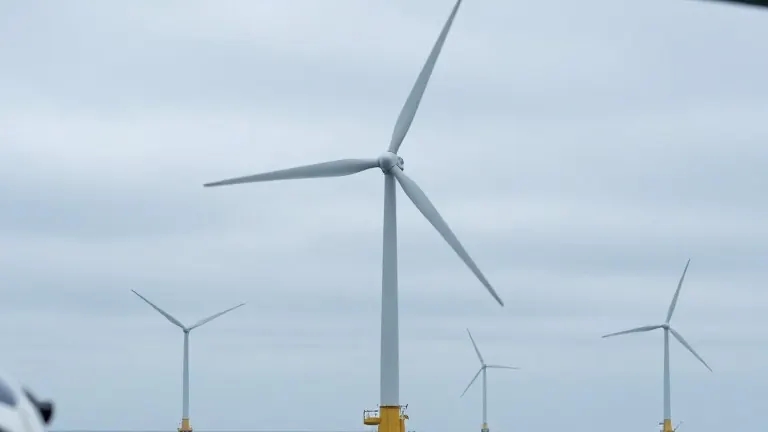
The aircraft was traveling from Bermuda to Boston with six people aboard when it entered the Atlantic Ocean. Brady said a Coast Guard cutter dispatched from New London, Connecticut, traveled around offshore wind turbines instead of following a direct path to the crash site. Although her organization has not independently confirmed the 30-minute figure, Brady argued that the altered route added considerable time to the response. The Coast Guard launched a search but later called it off without locating the plane.
Brady also cited a separate medical evacuation on October 14 to support her case. During that incident, rescuers attended to a vessel working near an offshore wind construction site. She noted that Coast Guard radio transmissions indicated a 10-minute arrival time, contingent on the crew clearing nearby turbines. Her group tracked an MH-60 helicopter during the response and recorded a descent time of approximately 12 minutes.
The discussion extended to the 2019 sinking of the fishing vessel Mistress near Block Island, Rhode Island, which killed two fishermen. In September 2026, the environmental group Green Oceans announced that wreckage believed to belong to the boat was found 50 feet from a turbine at the Block Island Wind Farm. While the discovery prompted questions about the wind farm’s role in the accident, no direct connection between the turbines and the sinking has been established.
Catsimatidis joined the critique, focusing on the economic and security implications of offshore wind development. He stated that the technology increases electricity prices by a minimum of 300% while damaging the coastline. "I am shocked that the environmentalists who want wind power are destroying the coastline of the Atlantic Ocean and Long Island with these windmills," Catsimatidis said. He also raised the issue of security, claiming that underwater drones could bypass radar detection because of the wind infrastructure.
A 2022 report from the National Academies of Sciences, Engineering, and Medicine supports the technical concerns raised by the fishermen. The report found that offshore wind turbines can interfere with marine radar systems, which may make it more difficult to detect nearby vessels. Brady referenced these findings in a statement to 77 WABC Radio, warning that the risks affect both those in distress and the rescue crews.
"Minutes count in search and rescue, and offshore wind farms compromise the radar systems rescuers rely on to locate vessels in distress and navigate safely," Brady said. She added that a delay or a single error could result in death for a person in the water or for a rescuer attempting to reach them. Brady asserted that the Biden administration approved these projects despite documented warnings about radar interference and rescue risks.
The concerns arise as more offshore wind projects develop along the East Coast. Brady concluded her remarks by stating that no family should have to pay for administrative decisions with a preventable death.
Source: WABC · original report published