
Doctors Detail Home Care for Runners With Detached or Blackened Toenails
Podiatric surgeons advise on cleaning, bandaging, and shoe fit to manage subungual hematomas without hospital visits.
By Sienna Foster ·
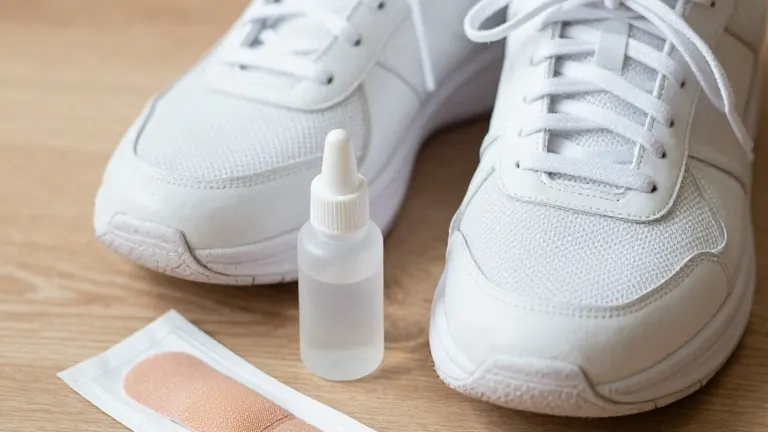
Podiatric surgeons instruct runners to clean, protect, and correctly fit their shoes to manage subungual hematomas, a condition commonly known as runner’s toe. Dr. Jacob Wynes, an associate professor of foot and ankle surgery at the University of Maryland School of Medicine, identifies the condition as bleeding under the nail bed that causes red, purple, or black discoloration. The trauma often leads to partial or complete nail loss, typically affecting the longest toe, which is usually the big toe or the second toe.
Dr. Kristin Hullings, an assistant professor of clinical orthopaedic surgery and sports medicine at Temple University’s Lewis Katz School of Medicine, notes that the condition is not exclusive to runners. Soccer players, skiers, hikers, golfers, and anyone wearing poorly fitting shoes can develop the injury. Sudden trauma from stubbing a toe or dropping an object on it also causes the bleeding, but Hullings advises seeing a doctor in those cases to rule out fractures.
Dr. Rull James Toussaint, chief of the foot and ankle division at the University of Florida College of Medicine, explains that repetitive trauma ruptures blood vessels in the nail bed. Factors that increase friction and pressure include running downhill, high mileage, loose shoes that allow feet to slide, tight shoes that squeeze toes, long toenails, and heat or moisture buildup.
Treatment varies based on whether the nail remains attached. If the nail is intact, not loose, and pain-free, Toussaint says it will likely grow out on its own. If the nail partially or fully detaches, Hullings says the goal is to keep the exposed nail bed clean to prevent infection and promote regrowth. Patients should cleanse the toe with mild soap and water or a saline solution.
For partially detached nails, Hullings advises leaving the attached portion in place to act as a protective splint. She recommends trimming only the loose, snagging edges to prevent catching on socks or sheets. Wynes suggests using a cuticle cutter for precise clips. After trimming, patients should apply a topical antibiotic ointment to the exposed nail bed to prevent infection and keep the area moist. Hullings recommends covering fully detached nails or large exposed areas with a non-adherent bandage, changing it daily.
Runners with mild to moderate cases can continue exercising if they take precautions. Wynes recommends wearing silicone sleeves on the affected toes to protect and cushion the nails. To prevent recurrence, Toussaint says correcting shoe fit is essential. He advises getting feet professionally measured at night when they are most swollen and ensuring at least one thumb’s width of space between the longest toe and the top of the shoe. Wearers should also choose breathable, moisture-wicking socks to reduce heat and friction.
Source: NBC News