Boom Supersonic pivots to AI power
The maker of the Overture jet is building gas turbines in Colorado as airlines question its 2029 delivery target.
By Pablo Serrano ·
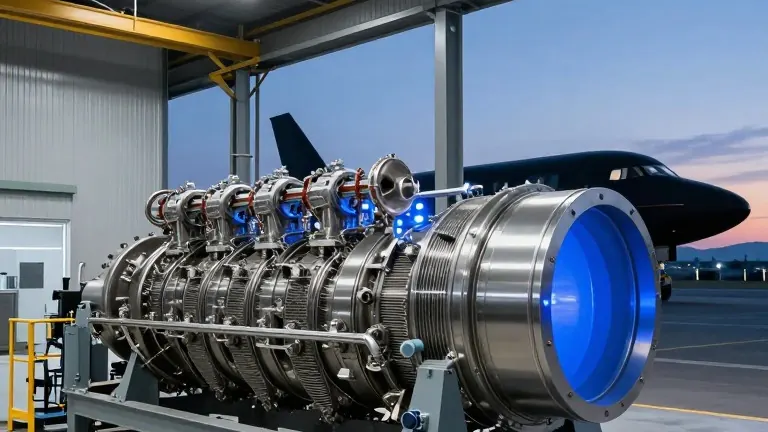
Boom Supersonic is expanding its manufacturing footprint in Colorado to produce gas turbines for artificial intelligence data centers. The move signals a dual focus for the company, which aims to revive commercial supersonic air travel with its Overture jet. CEO Blake Scholl framed the shift as a new era for energy and flight, stating that it is time for a renaissance in both sectors.
The company first drew attention in 2024 and 2025 by flying its XB-1 demonstrator. Those flights tested a boomless cruise concept. This technique uses the Mach cutoff phenomenon. Aircraft fly just above supersonic speeds at high altitudes. Specific atmospheric conditions cause shockwaves to refract upward. This minimizes the sonic boom heard on the ground.
Regulatory support has grown for the Overture. President Donald Trump issued an executive order to ease restrictions. In June 2026, the Federal Aviation Administration proposed a rule. The proposal would overturn a long-standing ban on commercial supersonic flights over the United States.
Despite regulatory progress, the timeline for the Overture faces scrutiny. United Airlines CEO Scott Kirby voiced doubts on the Office Hours: Business Edition podcast on October 28. He addressed the company's official target of 2029 for the first delivery. Kirby noted that the 2029 date is the official timeline. He added that it will not happen in 2029 and will take longer.
Boom has conditional agreements with American Airlines, Japan Airlines, and United Airlines. These deals involve non-refundable deposits of unspecified amounts. The deposits allow the carriers to purchase the Overture once it becomes commercially available.
Early backers for both the aircraft and the turbine ventures have questioned delivery schedules or exited. The company's press releases have previously described achieving certification and carrying the first paying customers by 2029.
Source: Ars Technica
More Business · Consumer Alerts · Report a business · Got a Story?