
Blake's Orchard ends lagoon odor issue with 1.7 million-gallon system
A $2.5 million upgrade in Armada Township increased wastewater capacity and added aeration to stop smells that bothered neighbors for two years.
By Pablo Serrano ·
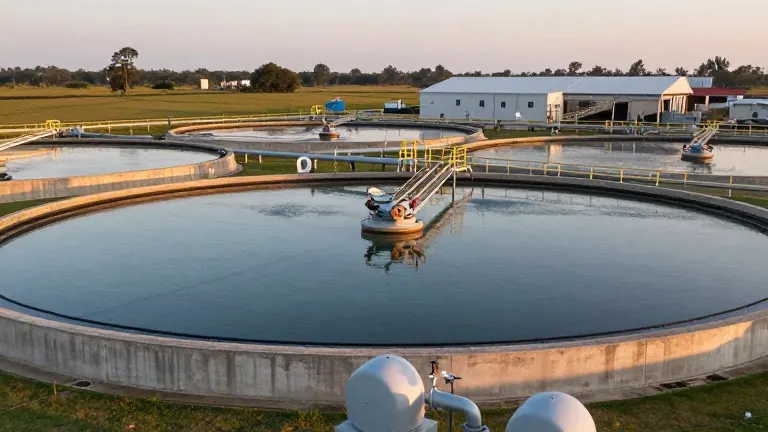
1.7 million gallons. That is the new capacity of the wastewater system at Blake's Orchard & Cider Mill in Armada Township, Michigan. The farm spent $2.5 million to build the facility, a move designed to solve a persistent odor problem that affected nearby residents for roughly two years.
Jeff Blake, the company's president and chief operating officer, said the previous lagoons lacked the necessary space and oxygen to process organic material effectively. During hot summer months, the water became stagnant and produced strong smells. Blake acknowledged the impact on the community.
“We were a bit of a nuisance to our neighbors,” Blake said. “If it got really hot out and our ponds or lagoons got stagnant, they would start to smell a little bit. So we wanted to fix that to be a good neighbor.”
The water in the system is not sewage. It consists of process water created by washing apples, cleaning equipment, pressing cider, and making other beverages. The volume varies with production levels. On slow days, the farm generates a few hundred gallons. During peak seasons, that number rises to about 20,000 gallons per day.
The old system held only about 500,000 gallons. The new infrastructure triples that capacity. It also includes two 25-horsepower blowers that pump air into the lagoons. This aeration process introduces oxygen, which helps microorganisms break down organic matter and prevents the conditions that caused the previous odors.
Blake identified the aeration and increased capacity as the core improvements. “The real technology is in our aeration systems and our increased capacity,” he said.
The farm began operating the new system in August. Blake reported that the smells disappeared by early to mid-August. On October 1, Blake's Orchard began operating solely under its new permit from the Michigan Department of Environment, Great Lakes and Energy, known as EGLE. Since that switch, the company has received no new odor complaints.
The project required coordination with state agencies. Blake said EGLE and the Michigan Department of Agriculture and Rural Development provided technical guidance on treatment methods. The farm also engaged with the local community during the development phase.
Company representatives spoke with about 35 nearby residents. They distributed flyers and notices and held a presentation at an Armada Township Board meeting. Blake noted that while it was hard to quantify direct feedback, the company was clear on the need to address the issue.
“We heard that there was an issue, and we were dedicated to fixing it,” Blake said. The state permit for the new system is valid through 2031.
Source: The Macomb Daily
More Business · Consumer Alerts · Report a business · Got a Story?