
Phoenix storms lift Lake Powell 12 feet, leaving it at a quarter full
Rain in the Valley raised reservoir levels, but experts warn local precipitation cannot fix the Colorado River deficit.
By Marcus Reed ·
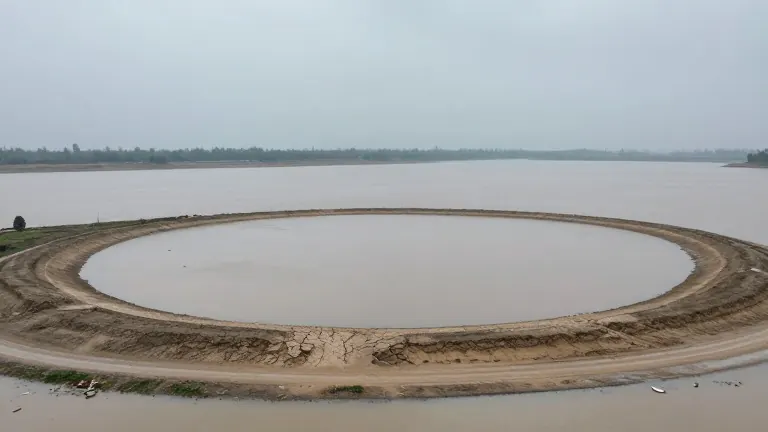
Heavy rain swept across the Phoenix Valley over the past two weeks, pushing water levels up in Arizona’s major reservoirs. The downpour provided temporary relief after a dry summer, yet it left the region’s water infrastructure fundamentally underfilled.
Lake Powell, the largest reservoir in the state, rose 12 feet during this period, according to Sarah Porter, director of Arizona State University’s Kyl Center for Water Policy. Despite that gain, the reservoir currently holds only about 25% of its total capacity. Further downstream, Lake Mead, the nation’s second-largest reservoir, sits at roughly 23% full.
Porter noted that the added volume is helpful but insufficient to solve the regional water crisis. "It’s water. It helps. Is it enough to solve the Colorado River crisis? No," she said. She added that the reservoir remains at a very low level, preventing local officials from celebrating the recent weather system.
The storms brought mixed results for the area. While they replenished local sources, the runoff caused destructive flooding in several rural Arizona communities. Porter emphasized that rain in desert valleys cannot replace the winter snowpack required to sustain the regional water supply.
More than 80% of flows in the Colorado River system originate from snowpack in the upper Rocky Mountains across Colorado, Wyoming, and Utah. Porter stated that rain falling across the Phoenix metropolitan area does not feed those critical headwaters. "We love rain, but what we really need is snow pack in the upper Rockies," she said.
Source: KTVK