
Redistricting: New Maps Could Shift House Control by 2026
Nine states will use new congressional maps on Nov. 3, affecting roughly one in ten voters and potentially altering the balance of power in the U.S. House.
By Pablo Serrano ·
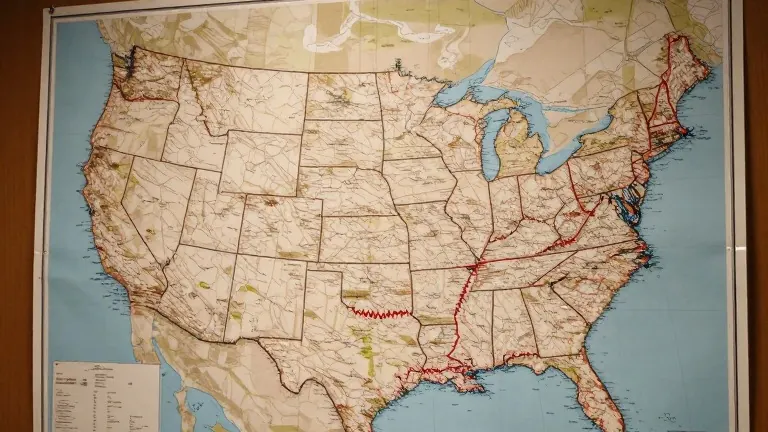
Nine states will use newly drawn congressional districts in the Nov. 3 midterm elections, a change that could determine which party controls the U.S. House of Representatives. According to an analysis by The Associated Press, the new boundaries may allow Republicans to gain as many as nine additional seats, while Democrats could secure up to six more seats. These shifts come just days before voters head to the polls, following a period of rapid legislative action in multiple states.
The redistricting process typically occurs once every ten years following the census. However, several states moved to update their maps earlier than usual amid a intense competition for House control. As a result, approximately 10% of all potential U.S. voters are now assigned to different congressional districts than in the 2024 elections. This widespread change impacts millions of individuals across the country.
The geographic impact is concentrated in a few large states. In Texas, more than 6.9 million potential voters are affected by the new boundaries. California sees over 6.3 million voters in different districts, and Florida has more than 4.5 million affected. Utah presents a distinct case, where a state court decision has altered the district assignment for roughly 69% of the state's potential electorate.
The nine states adopting these new maps are Alabama, California, Florida, Louisiana, North Carolina, Ohio, Tennessee, Texas, and Utah. The Associated Press reports that the majority of these new configurations favor Republican candidates. The exceptions are California and Utah, where the revised lines are designed to benefit Democratic candidates. This partisan split reflects the different political control of state legislatures and governorships in each region.
The push for these changes began in 2025 when President Donald Trump urged Republicans to redraw congressional districts to improve their party's chances of maintaining House control. During a CNBC interview in August 2025, Trump cited his 2024 presidential victory margins in Texas to justify the effort, stating, 'We have the right to five more seats.' In response, California enacted new districts that could grant Democrats up to five additional House seats. In Florida, Governor Ron DeSantis signed a map that improves the likelihood of Republicans winning four extra seats.
Other states, including Alabama, Louisiana, and Tennessee, modified their districts following a U.S. Supreme Court ruling in April. The decision weakened federal protections under the Voting Rights Act for districts with large minority populations. The practice of gerrymandering, or manipulating district boundaries to favor a political party, involves either packing opponents into few districts or diluting their influence by spreading them across many. These methods allow the party in power to shape electoral outcomes before votes are cast.
Source: KTAZ