Radburn: 25,000 Planned, Fewer Built, Legacy Endures
Fair Lawn's 1929 development was designed for a quarter of a million residents but collapsed under bankruptcy, leaving behind a pioneering suburban layout.
By Pablo Serrano ·
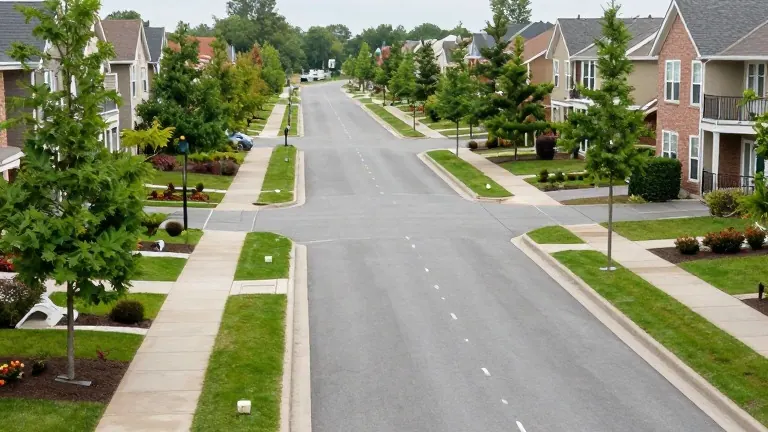
Radburn in Fair Lawn was conceived in the late 1920s to house approximately 25,000 residents, a scale that its developers never achieved.
The community was created by the City Housing Corporation, led by developer Alexander Bing. Planners Clarence Stein and Henry Wright designed the neighborhood to separate pedestrians from automobile traffic, a concept they termed the "superblock."
Short, dead-end streets carried cars to homes, while shared green spaces and pedestrian paths connected residences to parks and facilities. Underpasses allowed residents to walk beneath roads without crossing vehicle lanes.
The first residents moved in on April 25, 1929, when Jim and Emma Wright took possession of 2 Allen Pl. Two days later, Howard and Lillian Zeller and Fred and Kathy Veile arrived at their new homes.
Kathy Veile recalled in a 1978 interview that the three couples gathered at the Wrights' home that April evening. Surrounded by woods and ongoing construction, the neighbors jokingly elected a mayor, police chief, and fire chief.
The project was marketed as a "town for the motor age," promising convenient commuting and family-oriented community life. However, early conditions were sparse, with few trees for shade and limited local amenities.
Residents traveled to Paterson for shopping and banking, while vendors delivered food directly to the neighborhood. Kathy Veile, who owned a car, collected grocery orders from neighbors before driving to Ridgewood.
Six months after the first families arrived, the stock market crashed. Construction continued on a reduced scale during the early Great Depression, but the developer's finances deteriorated as home sales slowed.
In April 1934, City Housing Corporation promoted new houses on Barry Place. A rendering of a model home appeared in the Bergen Evening Record under the headline, "The Home with a Future."
Less than five months after that advertisement, the company filed for bankruptcy reorganization. Historical research by Rick Hampson and Stephen Taylor notes that the developer had invested heavily in land and infrastructure for a much larger community than was built.
Archival records indicate that Black prospective residents were systematically excluded during the first two decades through informal sales practices. Some Jewish prospective buyers also encountered discrimination, though Jewish families were among the earliest residents.
Radburn's design influenced later planned communities, including Greenbelt, Maryland, where planners adapted its pedestrian routes and shared green spaces. Today, the neighborhood remains part of Fair Lawn, with Allen Place still standing where the first residents began their lives in 1929.
Source: News 12 New Jersey · original report published