Cross-Europe Protests Challenge Leaders Over Cost of Living and Military Spending
Coordinated demonstrations in 25 countries reflect growing discontent with economic policies and budget priorities.
By News Media House Staff ·
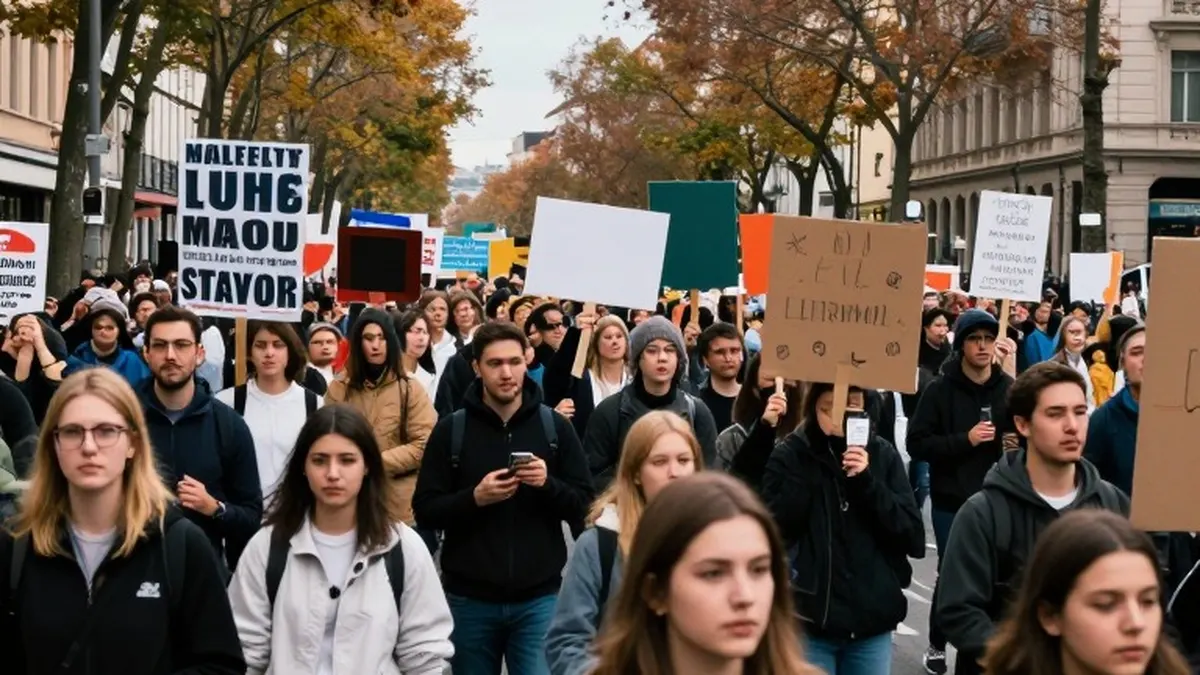
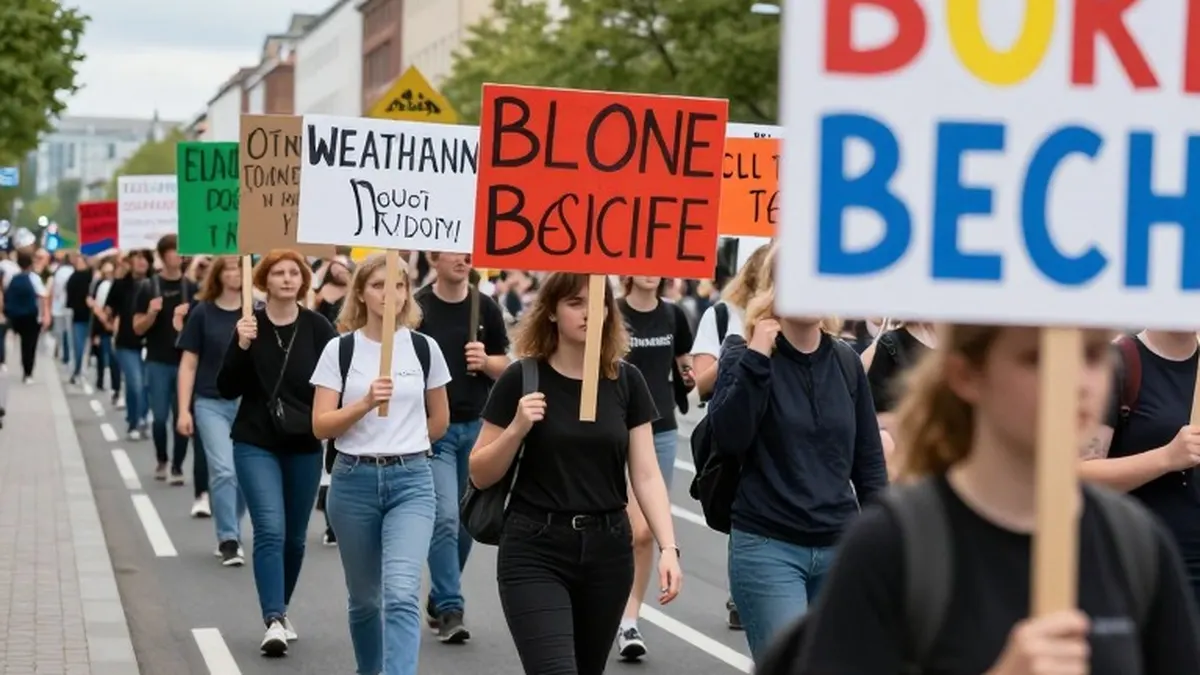
A significant wave of public dissent swept across Europe on Friday, with demonstrators gathering in 25 different nations to voice grievances regarding the high cost of living, military expenditure, and the climate crisis. The coordinated actions placed increased pressure on political leaders who are facing accusations of overlooking the specific concerns of younger generations.
The movement was largely inspired by the intense demonstrations that have recently shaken France. Thousands of participants took to the streets in several major countries, including the United Kingdom, Austria, Germany, Spain, Italy, Sweden, and Croatia, joining a broader continental effort to demand systemic change.
In Italy, the scale of the protest was substantial, with tens of thousands of workers and students participating in rallies across more than 100 cities. These events coincided with a general strike organized by CGIL, the country's largest trade union, which brought together employees from both private and public sectors, including those in schools and healthcare facilities.
Maurizio Landini, the leader of CGIL, addressed a crowd in Rome, stating that the demand for change is expanding among ordinary people across the continent. While many rallies proceeded peacefully, some incidents occurred. In Rome, demonstrators threw objects at the Ministry of Education, and in Bologna, clashes with police were reported. In Milan, protesters burned a cardboard tanker and figures representing Israeli Prime Minister Benjamin Netanyahu and US President Donald Trump.
These Italian protests followed a nationwide mobilization on October 17 that had turned into rioting and looting. That earlier event led Prime Minister Giorgia Meloni's right-wing government to approve strict security measures and deploy the army alongside police for subsequent demonstrations. Since then, student groups have continued to occupy schools and universities, increasingly focusing their opposition on higher military spending.
Opposition leaders participated in the Friday demonstrations to criticize the current government's budget policies. Elly Schlein, leader of the centre-left Democratic Party, argued that the proposed 2027 Budget Law lacks a clear vision for the country's future. She noted that the plan fails to support industries while simultaneously cutting funding for public healthcare and education.
In Germany, the campaign group known as Gen Z regelt, which translates to Gen Z sorts it, organized protests in 73 cities and towns. Approximately 4,000 people gathered at Alexanderplatz square in Berlin, while the protest in Cologne attracted several thousand demonstrators, falling short of the 5,000 attendees initially expected by police. Participants in these German rallies called for increased education funding and expressed opposition to a potential return to compulsory military service.
Austria also saw youth-led action, with several hundred people gathering outside the University of Vienna. The protest demanded more spending on education and less on weapons. Police eventually dispersed the group after reported disturbances, using pepper spray and making several arrests during the process.
In Croatia, students boycotted classes and staged protests in about a dozen cities. Their primary demands included greater investment in education, housing, and public services, while opposing the allocation of funds toward military spending.
The momentum for these cross-border protests was driven by much larger demonstrations in France, which began in September and included violent confrontations with police and looting. On Tuesday, France's Interior Ministry reported that 146,000 people protested across the country, with 28,000 in Paris alone. However, the CGT trade union estimated the nationwide total at just over 500,000 demonstrators.
Economic data underscores the financial pressures driving these protests. According to Eurostat, the European Union's statistics agency, prices for everyday items such as food, energy, transport, and bills have risen between 59 and 78 percent since 2000 in France, Italy, Spain, and Portugal. When inflation is accounted for, the average full-time wage in Italy dropped by nearly 5 percent between 2000 and 2025. In contrast, real wages rose by 7 percent in Spain, 11 percent in France, and 20 percent in Portugal over the same period, according to OECD wage data adjusted with Eurostat's price index.
Originally published by News Media House