French Senate Approves Controversial Police Firearms Law
The upper house of France's parliament has finalized a bill that presumes police officers acting in self-defense when using firearms, a move that has drawn sharp criticism from human rights groups and left-wing politicians.
By News Media House Staff ·
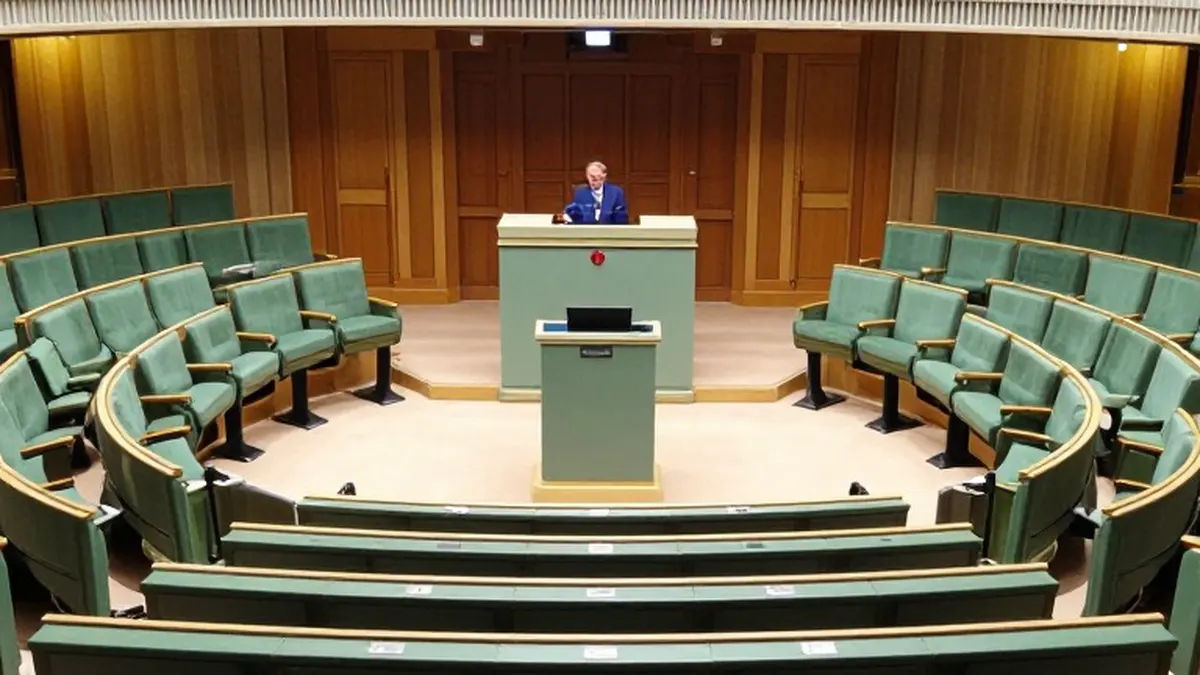
The French Senate granted final approval on Friday to a contentious piece of legislation that establishes a legal presumption of legitimate self-defense for police officers who use their firearms. This decision fulfills a long-standing policy goal of the far right, yet it arrives at a moment when public scrutiny of law enforcement tactics has intensified due to recent weeks of student-led demonstrations.
The bill, which was initially passed by the lower house in July, received a vote of 205 to 110 in the right-leaning Senate. The core provision of the text stipulates that when police officers employ their weapons, they are legally presumed to have acted within the framework of the law. This shift in legal interpretation is designed to provide greater protection to law enforcement personnel during high-stress operational scenarios.
Government supporters, including the ruling administration and the political party of far-right presidential candidate Marine Le Pen, argue that the measure is necessary to correct what they describe as an automatic suspicion of disproportionate force. They contend that the new rule will help stabilize the legal standing of officers who must make split-second decisions while on duty.
Interior Minister Laurent Nuñez emphasized the practical impact of the law on Thursday. He stated that the legislation would end the common practice of placing police officers or gendarmes under custody immediately after they have used their weapons. According to Nuñez, the bill aims to fix the reflex of systematically questioning the demanding daily work of France's security forces.
Despite government backing, the measure has faced significant opposition from activist groups. Critics argue that the law effectively functions as a license to kill by making it more difficult to initiate investigations into police shootings. They warn that holding security forces accountable will become even harder in a system where cases of alleged police brutality rarely proceed to criminal court.
France's Human Rights League has expressed particular concern regarding specific scenarios. The organization argues that the new presumption could block the opening of investigations in cases where a shooting follows a failure to comply with a traffic stop or occurs during crowd control operations at protests. This concern is heightened by the current climate of public unrest.
In response to the Senate's decision, left-wing lawmakers have pledged to challenge the bill before the Constitutional Council. This body serves as the country's highest constitutional authority and has the power to halt the legislation from coming into law. The left views this judicial appeal as a critical step in protecting civil rights against what they see as an overreach of executive power.
The debate over the bill also highlights broader issues of inequality within the French justice system. A report published last year by France's rights chief indicated that young men perceived as Arab, Black, or from North Africa are four times more likely to be stopped by police than the rest of the population. This statistic underscores the ongoing tension between law enforcement practices and minority communities.
The adoption of this law occurs against the backdrop of renewed protests that have brought the issue of police brutality back into the national spotlight. While the government moves to solidify the legal position of its officers, the opposition remains determined to test the limits of the new framework through the constitutional process.
Originally published by News Media House